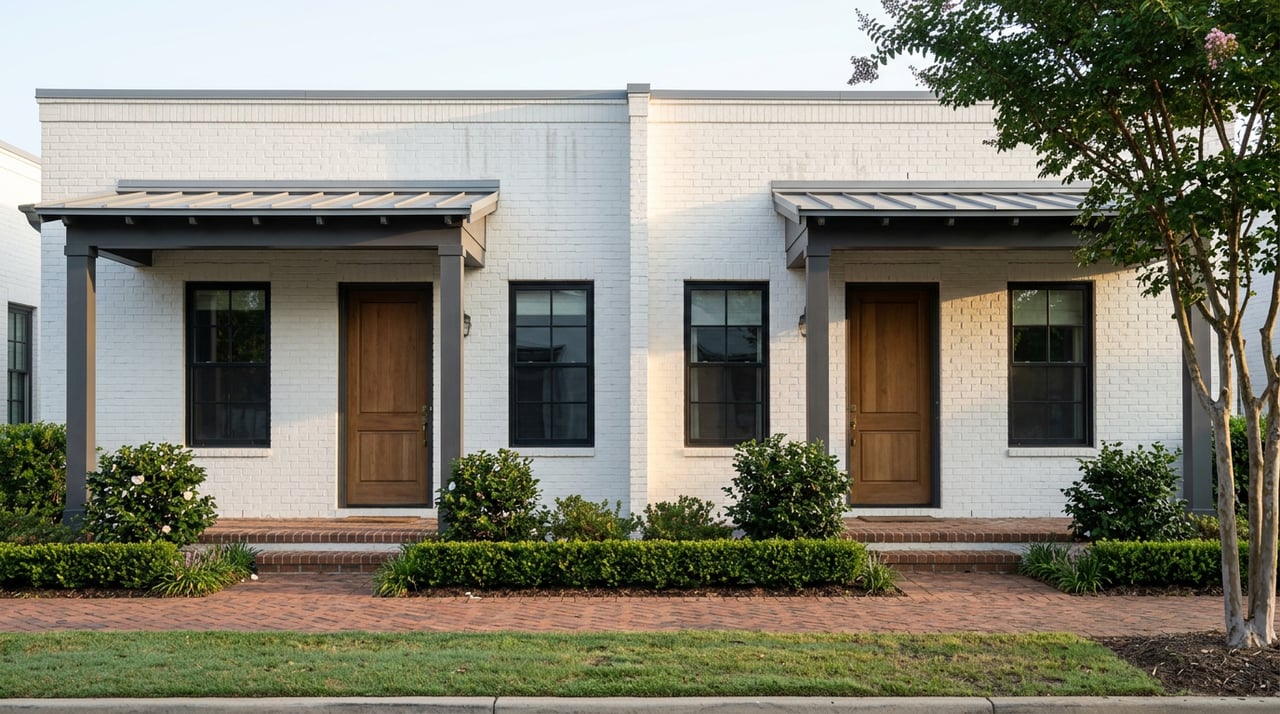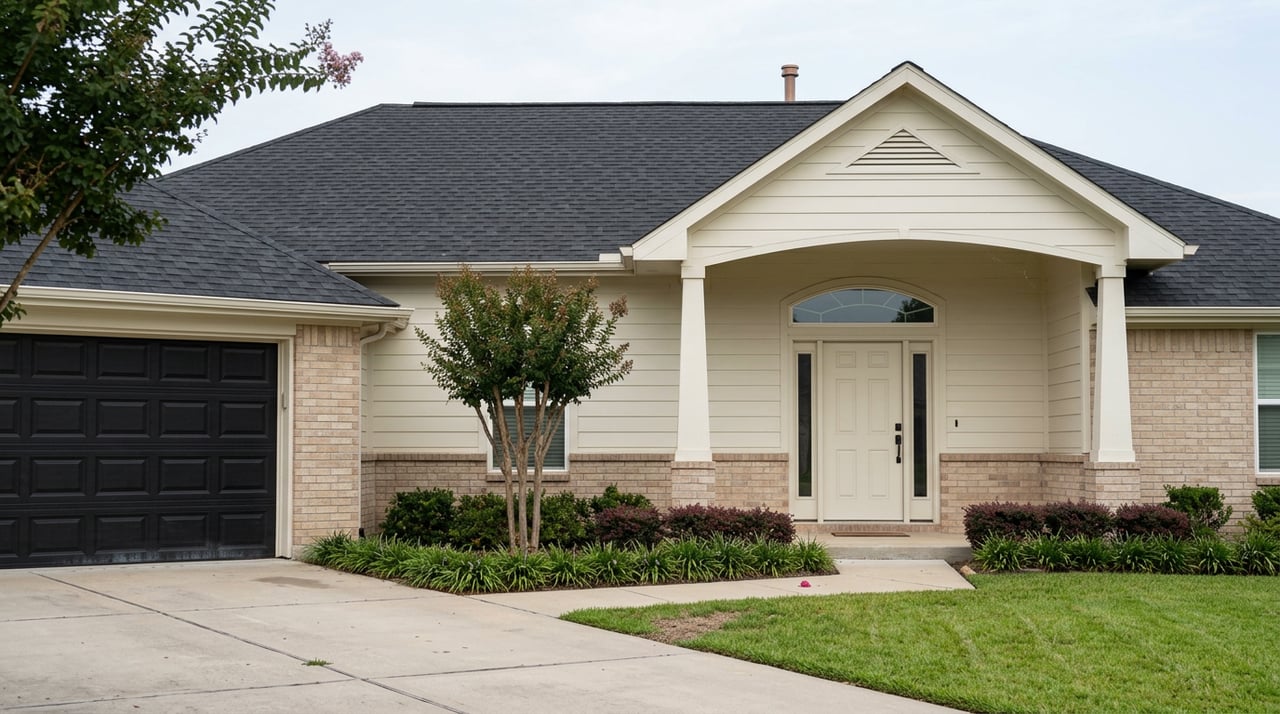
Why does the same three-bedroom floor plan in Youngsville show a firm sticker price on one listing and a $12,000 "incentive" splashed across the next? The base price is not the negotiation. The stack behind it is.
Buyers touring The Grove at Sugar Mill Pond, Caneview Estates, Canehaven, Benson Grove, or Mon Cherie this summer are being sold a payment, not a price. Once you translate the offer into monthly dollars and cash-to-close, the real gap between new construction and a comparable Youngsville resale gets much smaller, and in some cases inverts. That is the mechanism this post is about.
The market Youngsville buyers are actually shopping
Two numbers set the stage. Homes.com shows 740 homes sold in Youngsville over the last 12 months, with a median sale price of $297,990 (up 8% year over year) and an average of 100 days on market, well above the national 53-day average. Movoto shows June 2026 median list price at $304K, down roughly 8% from June 2025.
Against that, inventory is heavy on the new-construction side. Homes.com counts 297 new construction homes for sale in Youngsville. A market with steady buyer demand, softer list prices, and a wall of unsold new inventory is exactly the market where builders reach for incentives before they touch the sticker.
The May snapshot from BY Local News put Broussard homes at an average of $360,025 and Youngsville at $359,494, with Youngsville moving 76 of 285 listings that month at 78 days on market, an absorption rate of 5.07 that reads as a balanced market rather than a seller's one. Balanced markets are where incentive engineering gets creative.
Why the sticker holds while the stack grows
Builders protect base price for a reason. A rate buydown or closing-cost credit lets a builder advertise a lower monthly payment without officially reducing the price, which preserves community values while still moving the home. For a buyer, that means the discount you're being offered is real, but it is paid to you in a form the appraiser and future comps will not see.
Two Youngsville examples show the shape of the stack this summer.
- DSLD Homes at Caneview Estates. Rates as low as 3.99% (6.788% APR) on FHA, RD, and VA loans, with up to $12,000 toward rate buydown or closing costs, plus a choice between free window blinds or free front gutters.
- Level Homes at Sugar Mill Pond, Canehaven, and Benson Grove. A $10,000 incentive credit valid on contracts fully executed by July 31, 2026, applicable to rate buydown, design upgrades, or closing costs, provided the buyer finances through LH Lending or pays cash.
Across the broader MLS, the same shape repeats. Multiple Youngsville listings advertise a 2/1 buydown with a rate as low as 3.99% for the first 12 months. The nationally standard mechanic behind that number: a 2-1 buydown reduces the interest rate by 2% in year one, 1% in year two, then returns to the full rate in year three and beyond, with the builder covering the difference through a fund set aside at closing.
Three questions that turn a headline offer into a real number
The reason the incentive stack is confusing is that "up to $12,000" and "as low as 3.99%" are marketing constructs, not contract terms. Three questions collapse them into something you can compare against a resale.
1. Is the incentive baked into the base price?
This is the question that decides whether the deal is a discount or a shuffle. In some cases the cost of the rate buydown or credit is baked into the home price, so you get a lower rate but finance a higher balance. If the same DSLD floor plan sold for $305,000 last quarter and now shows at $317,000 with a $12,000 credit, the credit is a rebate on a price you already paid.
The check is simple. Ask for the base price history on the plan you're considering, and ask what the builder would accept without the incentive package. If those two numbers are the same, the credit is a real reduction. If the higher price only exists to fund the credit, you're financing perks.
2. What happens in year three of the 2/1 buydown?
Temporary rate buydowns can lower payments now, but buyers need to be comfortable with the higher payment once the buydown ends. The 3.99% first-year rate that headlines many Youngsville listings resets on a schedule. If the note rate is 6.99%, the payment on a $300,000 loan climbs several hundred dollars a month by year three. That is the number your budget needs to survive, not the year-one teaser.
One of the biggest red flags is a deal that only works if you refinance quickly, because if mortgage rates stay higher longer than expected, buyers could find themselves locked into a payment they didn't fully plan for once the buydown expires.
3. What does the preferred-lender requirement actually cost?
Almost every full-value incentive in Youngsville right now is contingent on using the builder's lending partner. Level Homes' terms note that the buyer is not required to use the builder's trusted lender or title partner, but doing so is necessary to qualify for the listed incentive. Preferred lenders can be convenient, but they might not offer the best overall deal, and fees, rate structures, and loan terms can differ from outside lenders.
The way to answer this one honestly is to get a full loan estimate from the builder's lender and one from an independent lender on the same day, then compare APR and total cash to close side by side. If the outside lender's APR is 0.5% lower, the "$10,000 credit" may only be worth $3,000 to $4,000 net once the loan cost difference is priced in.
How this changes the resale comparison
Here is where the thesis lands. A Youngsville buyer looking at a $315,000 spec home in Caneview Estates with the full DSLD stack, and a $298,000 resale of similar size on a comparable street, is not comparing $315,000 to $298,000. They are comparing:
- A new build with a first-year payment discounted several hundred dollars a month, a locked-in preferred-lender relationship, a closing-date deadline, and a base price that may not survive an appraisal if incentives get pulled from the market.
- A resale where the price is the price, the lender is your choice, and the seller's leverage has been softened by an average 100 days on market and a year-over-year list-price decline.
Both sides have a case. New construction gives you the warranty, the finish package, and a real payment reduction for two years. Resale gives you flexibility on financing, established landscaping and fencing, and often a shorter commute to established schools and services. The point is not that one wins. The point is that the incentive stack is doing work the sticker is hiding, and a buyer who compares only sticker to sticker is comparing the wrong two numbers.
Pricing that looks out of sync with comparable homes is a caution sign; if a new build is priced significantly higher than similar resales in the area, even after incentives, the buyer might be financing perks rather than value, and that can matter later at refinance, sale, or when tapping equity.
The mid-year deadline that ends this window
Level Homes' current $10,000 credit requires a contract between May 25 and July 31, 2026, valid on pre-sold and spec contracts fully executed by July 31. DSLD's Caneview Estates package required a purchase agreement by May 31 and a closing by August 31 for its own version of the stack. Deadlines this specific are not marketing garnish. They are how builders manage quarterly absorption, and they explain why the best negotiating window on a Youngsville spec home often sits inside the last two weeks of a promo period, when a sales rep is trying to save a contract.
If the stack is engineered to move inventory before a closing cutoff, a buyer with a clean pre-approval and flexible closing calendar has more room to ask for both the incentive and a base-price concession than the marketing copy suggests.
FAQ
Are permanent buydowns available in Youngsville, or only 2/1 structures? Both. The visible listings lean 2/1 at 3.99% for year one, but permanent buydowns lower the rate for the life of the loan, with the builder paying points at closing to secure a reduced rate that never steps back up. If you plan to stay long term, ask whether the credit can be redirected from a temporary buydown to a permanent one.
Can the $10,000 or $12,000 be taken as a price cut instead? Sometimes, but rarely at full value. Builders often treat incentives as the negotiation lever, not price, which can limit flexibility if you'd rather reduce the purchase price instead. A written counter that asks for a partial price reduction plus a smaller incentive is more likely to get traction than an "all cash off sticker" ask.
What if I'm building custom on my own lot instead of buying a spec? The incentive math changes. Custom builds price the finish package, the land, and the construction loan separately, and the rate-lock window during construction (typically 90 to 360 days) becomes the more important number to negotiate. If that's your path, the questions to ask a builder shift from "what's the incentive" to "what does the extended rate lock cost, and who eats the difference if rates move."
Does the resale market in Youngsville favor buyers right now? It reads more balanced than pro-buyer. Broussard's absorption rate of 3.69 points to a tighter, more seller-favorable market, while Youngsville's 5.07 leans toward a more balanced one. That leaves room for negotiation on well-priced homes and more room still on listings past 90 days.
If you are weighing a Youngsville new build against a resale this summer, the most useful conversation is not about which one is "better." It is about pulling the incentive stack apart, pricing the year-three payment, and comparing the two offers on the same set of terms. That is the kind of walkthrough Sylvia McLain and Cody Musgrove do every week, drawing on years inside both the brokerage and the build side of Acadiana homes. Let's Connect when you're ready to see the real numbers side by side.